
Legal Insights

Two legal tracks: government vs private disputes.
Feb 19, 2026
18 MIN

Public vs Private Law Key Differences

A clear guide to public vs private law in the U.S.: how government power differs from person-to-person disputes, what areas fall under each (criminal, constitutional, administrative vs contracts, torts, family/property), and how procedures, proof standards, remedies, and case control change your strategy.

Read article

Latest news

Intellectual Property Basics Guide

Intellectual property (IP) is a broad term that refers to creations of the mind—innovations, artistic works, designs, brand names, and trade secrets, to name a few—each of which can be protected under distinct legal frameworks. In essence, IP law allows individuals and businesses to claim ownership of intangible creations, preventing unauthorized use and ensuring rightful recognition and financial gain for the creator.

Jan 03, 2025
27 MIN

Administrative Law Meaning and How It Works

Administrative law governs how federal agencies create regulations, conduct inspections, impose penalties, and resolve disputes without traditional courts. This guide explains agency authority, the APA rulemaking process, enforcement actions, standards of judicial review, and your rights when challenging agency decisions.

Feb 18, 2026
15 MIN

Negligence vs Recklessness Legal Difference

A clear guide to negligence vs recklessness in U.S. injury cases: the mental state line, how courts classify conduct, and what proof you need. See where gross negligence fits, when punitive damages apply, and how insurance exclusions and settlement strategy shift when conduct moves from careless to consciously dangerous.

Feb 19, 2026
19 MIN

What Is Contract Law Explained

A clear guide to U.S. contract law: definition and purpose, the elements of enforceable agreements, how formation works (including online terms and the Statute of Frauds), key contract types, why contracts become unenforceable, and what remedies apply after breach—plus common pitfalls and FAQs.

Feb 19, 2026
23 MIN

Trending

Two legal tracks: government vs private disputes.
Feb 19, 2026
18 MIN

Public vs Private Law Key Differences

A clear guide to public vs private law in the U.S.: how government power differs from person-to-person disputes, what areas fall under each (criminal, constitutional, administrative vs contracts, torts, family/property), and how procedures, proof standards, remedies, and case control change your strategy.

Where the crash happens can decide whether you recover anything.
Feb 18, 2026
16 MIN

Comparative Negligence and Injury Claims

Comparative negligence lets you recover damages even if you share blame—your payout drops by your fault percentage. This guide explains pure vs modified systems (50% and 51% bars), contributory negligence holdouts, how insurers/juries assign fault, payout examples, multi-defendant splits, and mistakes that raise your share.

Desk with folders labeled copyright, trademark, patent, and trade secret next to an IP dashboard.
Jan 03, 2025
27 MIN

Intellectual Property Basics Guide

Intellectual property (IP) is a broad term that refers to creations of the mind—innovations, artistic works, designs, brand names, and trade secrets, to name a few—each of which can be protected under distinct legal frameworks. In essence, IP law allows individuals and businesses to claim ownership of intangible creations, preventing unauthorized use and ensuring rightful recognition and financial gain for the creator.

The line is awareness of risk.
Feb 19, 2026
19 MIN

Negligence vs Recklessness Legal Difference

A clear guide to negligence vs recklessness in U.S. injury cases: the mental state line, how courts classify conduct, and what proof you need. See where gross negligence fits, when punitive damages apply, and how insurance exclusions and settlement strategy shift when conduct moves from careless to consciously dangerous.

Courthouse exterior with an open case law book and a gavel in the foreground.
Jan 03, 2025
20 MIN

The Role of Precedent in Court Decisions

The principle of precedent, often referred to as stare decisis (“to stand by things decided”), serves as a cornerstone of legal systems across the globe, particularly in common law jurisdictions. This article delves deep into the role of precedent in court decisions, highlighting its significance, historical evolution, and contemporary applications. It also explores how precedent influences judicial behavior, contributes to the predictability of the law, and adapts to societal changes.

Different methods start with different “evidence.”
Feb 18, 2026
23 MIN

Constitutional Interpretation Theories

A practical guide to constitutional interpretation: original intent vs original public meaning, living constitution theory, textualism, structuralism, and precedent. See how these methods shape rulings on guns, privacy, federal power, and speech—and why the same words lead to opposite results.

Top stories

Fiduciary duty shows up in more places than people realize.
Feb 18, 2026
20 MIN

Fiduciary Duty Meaning and Examples

A clear guide to fiduciary duty in U.S. law: what it is, why it’s the highest trust standard, and how loyalty, care, and full disclosure work in real life. Covers trustees, lawyers, corporate directors, executors, and advisors—plus common breach scenarios, remedies, and practical red flags.

Read more
Administrative agencies translate broad laws into binding rules.
Feb 18, 2026
15 MIN

Administrative Law Meaning and How It Works

Administrative law governs how federal agencies create regulations, conduct inspections, impose penalties, and resolve disputes without traditional courts. This guide explains agency authority, the APA rulemaking process, enforcement actions, standards of judicial review, and your rights when challenging agency decisions.

Read more
The line is awareness of risk.
Feb 19, 2026
19 MIN

Negligence vs Recklessness Legal Difference

A clear guide to negligence vs recklessness in U.S. injury cases: the mental state line, how courts classify conduct, and what proof you need. See where gross negligence fits, when punitive damages apply, and how insurance exclusions and settlement strategy shift when conduct moves from careless to consciously dangerous.

Read more
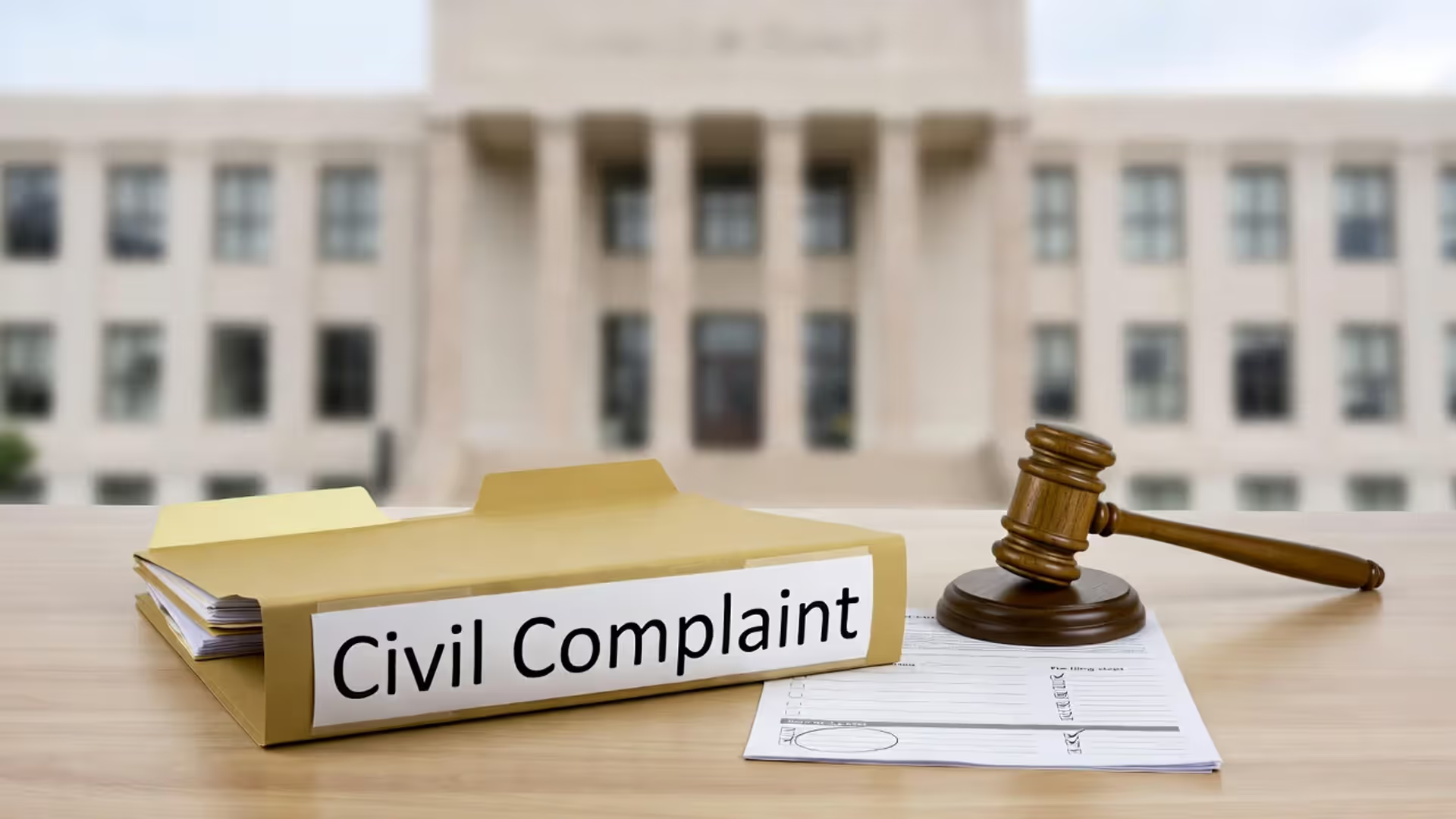
Desk with a civil complaint folder, calendar with a circled date, and a pre-filing checklist.
Jan 03, 2025
19 MIN

When to File a Civil Suit Guide

Filing a civil suit is a significant legal action that requires careful consideration, planning, and understanding of the law. Civil lawsuits arise in situations where one party believes they have been wronged or injured due to another party's actions or negligence, and they seek legal recourse to remedy the situation. This comprehensive guide will provide a detailed understanding of when to file a civil suit, the steps involved, and the factors to consider before proceeding.

Read more

Most read

Administrative agencies translate broad laws into binding rules.

Administrative Law Meaning and How It Works

Administrative law governs how federal agencies create regulations, conduct inspections, impose penalties, and resolve disputes without traditional courts. This guide explains agency authority, the APA rulemaking process, enforcement actions, standards of judicial review, and your rights when challenging agency decisions.

Feb 18, 2026
15 MIN
Everyday choices can create enforceable promises.

What Is Contract Law Explained

A clear guide to U.S. contract law: definition and purpose, the elements of enforceable agreements, how formation works (including online terms and the Statute of Frauds), key contract types, why contracts become unenforceable, and what remedies apply after breach—plus common pitfalls and FAQs.

Feb 19, 2026
23 MIN
The line is awareness of risk.

Negligence vs Recklessness Legal Difference

A clear guide to negligence vs recklessness in U.S. injury cases: the mental state line, how courts classify conduct, and what proof you need. See where gross negligence fits, when punitive damages apply, and how insurance exclusions and settlement strategy shift when conduct moves from careless to consciously dangerous.

Feb 19, 2026
19 MIN
Stare decisis keeps decisions consistent over time.

Legal Precedent Meaning and Examples

A practical guide to legal precedent in the U.S.: how stare decisis works, what makes precedent binding versus persuasive, and how federal/state court hierarchy controls outcomes. Learn how judges apply, distinguish, or overrule prior cases, why circuit splits happen, and common misconceptions lawyers see every day.

Feb 18, 2026
17 MIN
Disclaimer

The content on Legal Insights is provided for general informational purposes only. It is intended to offer insights, commentary, and analysis on legal topics and developments, and should not be considered legal advice or a substitute for professional consultation with a qualified attorney.

All information, articles, and materials presented on this website are for general informational purposes only. Laws and regulations may vary by jurisdiction and may change over time. The application of legal principles depends on specific facts and circumstances.

Legal Insights is not responsible for any errors or omissions in the content, or for any actions taken based on the information provided on this website. Users are encouraged to seek independent legal advice tailored to their individual situation before making any legal decisions.