Real Arbitration Case Examples and Outcomes
Real arbitration outcomes expose what generic descriptions miss. A fired sales manager wins $340,000 for age discrimination while a warehouse supervisor gets no

Source: skeletonkeyorganizing.com
Welcome to Legal Insights — a place where the law becomes clear, thoughtful, and approachable. Here, we explore legal topics in a structured yet accessible way, sharing knowledge that helps you better understand complex legal systems and real-world cases.
You’ll find in-depth legal insights, practical service guides, and detailed case studies covering areas such as contract law, intellectual property, and landmark Supreme Court decisions.
This platform is for those who seek understanding without intimidation — whether you’re a professional, a student, or simply curious about the law. Take your time, explore the details, and feel confident as your legal knowledge grows with Legal Insights.
Legal Insights also pays attention to the broader meaning of legal developments, helping readers see how laws, court decisions, and legal doctrines influence society, business, and everyday life. By presenting legal information with clarity and context, the journal encourages careful thinking, informed discussion, and a deeper appreciation of how the legal world continues to evolve.

A clear guide to public vs private law in the U.S.: how government power differs from person-to-person disputes, what areas fall under each (criminal, constitutional, administrative vs contracts, torts, family/property), and how procedures, proof standards, remedies, and case control change your strategy.
Read articleReal arbitration outcomes expose what generic descriptions miss. A fired sales manager wins $340,000 for age discrimination while a warehouse supervisor gets no
A practical guide to legal precedent in the U.S.: how stare decisis works, what makes precedent binding versus persuasive, and how federal/state court hierarchy controls outcomes. Learn how judges apply, distinguish, or overrule prior cases, why circuit splits happen, and common misconceptions lawyers see every day.
A practical guide to contract remedies when someone backs out: how courts award expectation and reliance damages, when restitution applies, and when judges order specific performance. Includes mitigation duties, foreseeability and certainty limits, liquidated damages, and common mistakes that reduce recovery.
A patent is a powerful legal tool that grants its holder the exclusive right to make, use, sell, or import an invention for a limited period—typically 20 years from the application filing date. Whether you’re an entrepreneur, an engineer, or an independent inventor, securing a patent can significantly impact your market advantage and financial potential. At its core, a patent protects your intellectual property (IP) from being exploited by c ompetitors, enabling you to recoup research and development costs, generate licensing revenues, and attract investors.

The Supreme Court of the United States plays a pivotal role in interpreting the Constitution and shaping the legal landscape of the nation. Its decisions not only resolve critical disputes but also influence public policy, societal norms, and individual rights. This article explores recent Supreme Court decisions that have had a profound impact on American law and society, providing detailed analyses and implications for various sectors.

"A step-by-step guide on how to form an LLC. Learn about the required documents, filing procedures, and key considerations to legally establish your business and protect your assets."
Real arbitration outcomes expose what generic descriptions miss. A fired sales manager wins $340,000 for age discrimination while a warehouse supervisor gets nothing due to limited discovery. A manufacturer recovers $1.9 million in unpaid invoices in nine months instead of three years. A nursing home pays $425,000 — but the sealed decision hides deficiencies from other families.

Every time you drive, run a business, or host a party, you're making decisions that could put you on the hook for someone else's losses. This guide covers four liability types from strict to vicarious, civil vs. criminal distinctions, negligence elements, fault-sharing rules by state, product liability claims, insurance coverage gaps, and why minimum policy limits leave you dangerously exposed.

When someone's wrongful behavior injures you, tort law creates the path to compensation — but miss one of four required elements and your case collapses. This guide covers intentional torts from battery to defamation, negligence claims comprising 90% of tort litigation, strict liability for defective products, compensatory vs. punitive damage calculations, state-by-state filing deadlines, and how
Twelve real trademark disputes reveal where courts draw the line between brand protection and overreach. From Adidas' $304M verdict against Payless to Louboutin's red sole defense against YSL, this guide covers the likelihood-of-confusion standard, dilution claims for famous marks, why parody defenses fail for competitors, small business vulnerability to trademark bullying, and the costly mistakes
Real arbitration outcomes expose what generic descriptions miss. A fired sales manager wins $340,000 for age discrimination while a warehouse supervisor gets nothing due to limited discovery. A manufacturer recovers $1.9 million in unpaid invoices in nine months instead of three years. A nursing home pays $425,000 — but the sealed decision hides deficiencies from other families.
Read more
Access a comprehensive employment contract template with clear, clause-by-clause guidance. Discover what provisions to include, avoid common drafting mistakes, and learn how to tailor terms for different roles, industries, and state requirements to ensure clarity, compliance, and strong employer protection.
Read more
Contract law explained: six required elements, common law vs UCC formation, void vs voidable defenses, Statute of Frauds rules, five common mistakes, and FAQ.
Read more"A step-by-step guide on how to form an LLC. Learn about the required documents, filing procedures, and key considerations to legally establish your business and protect your assets."
Read more
Eight real-life personal injury cases reveal exactly how victims navigated the legal system and won. From Melissa's motor vehicle accident settlement after an i
Contract law explained: six required elements, common law vs UCC formation, void vs voidable defenses, Statute of Frauds rules, five common mistakes, and FAQ.

Mediation puts you in the driver's seat for $2,000-$10,000. Arbitration hands decision-making to someone else for $30,000-$100,000. This guide compares both processes step by step — from session structure and binding rules to appeal rights, confidentiality protections, and hidden costs — then shows exactly when each method works best and why trying mediation first saves money even if it fails.
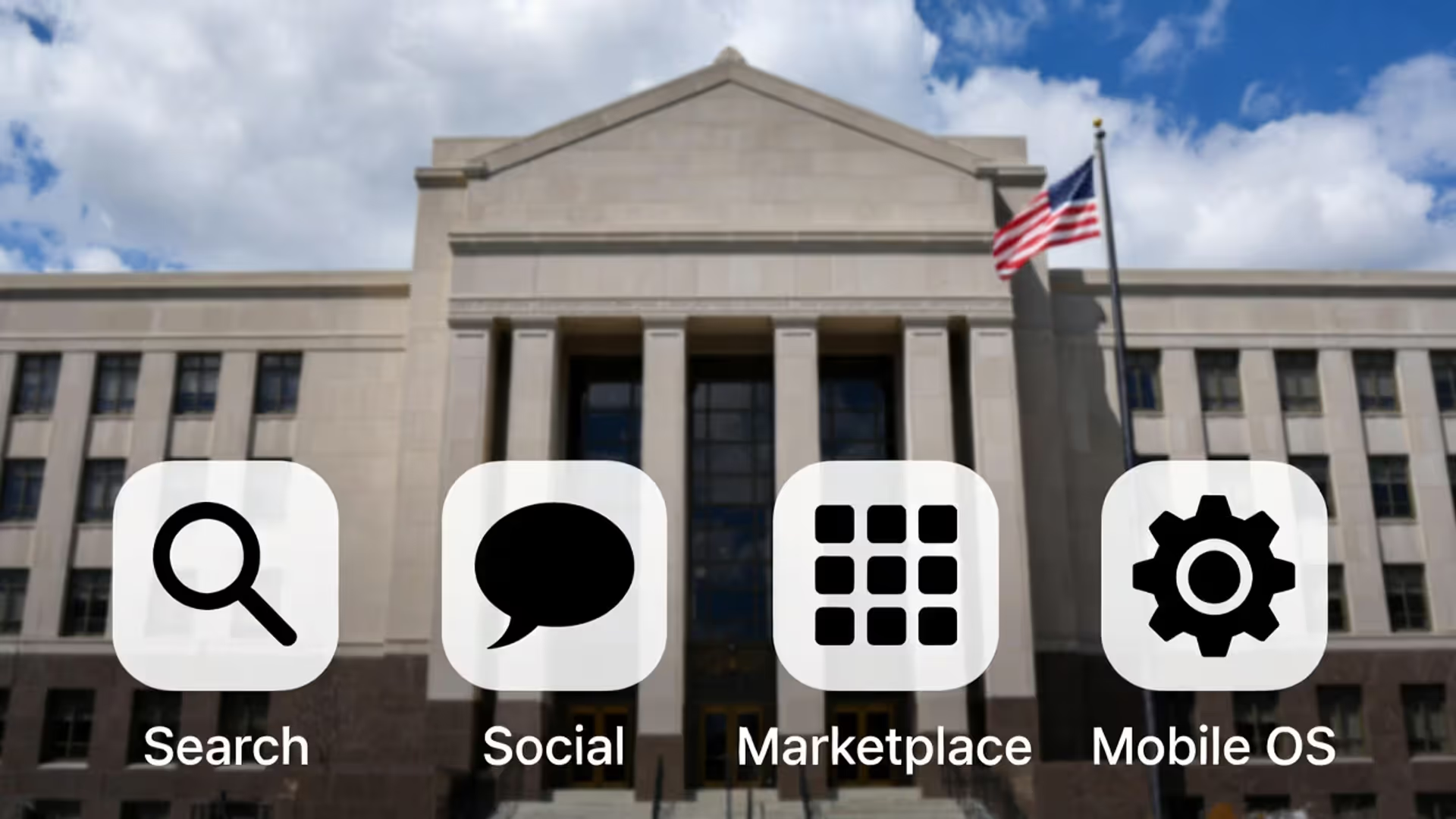
Antitrust law developments in 2025–2026 focus on major cases against Google, Meta, Apple, and Amazon, updated U.S. merger guidelines, stricter EU enforcement, and growing scrutiny of algorithmic pricing. Regulators are targeting digital dominance, data control, and AI-driven market coordination across global markets.

An independent contractor agreement is a legally binding document that establishes the terms under which a business engages a self-employed individual or entity to perform specific services. Unlike employment contracts, these agreements create a business-to-business relationship rather than an employer-employee dynamic.
The distinction matters because misclassification can trigger significant financial penalties. The IRS examines behavioral control (who directs how work gets done), financial control (who manages business aspects of the worker's job), and the type of relationship (contracts, benefits, permanency). Meanwhile, the Department of Labor applies its own tests to determine whether workers qualify for protections under the Fair Labor Standards Act.
Contractor relationship law has evolved substantially. A properly drafted agreement protects both parties by clarifying expectations, limiting liability exposure, and documenting the independent nature of the relationship. For the hiring party, it prevents allegations of employment misclassification. For contractors, it secures payment terms and defines deliverables clearly enough to avoid scope creep.
Consider a software developer hired to build a mobile app. Without a clear agreement, disputes arise: Who owns the code? What happens if the developer misses deadlines? Can the client demand unlimited revisions? An independent contractor agreement answers these questions before work begins, reducing friction and legal risk.
The I...
The content on Legal Insights is provided for general informational purposes only. It is intended to offer insights, commentary, and analysis on legal topics and developments, and should not be considered legal advice or a substitute for professional consultation with a qualified attorney.
All information, articles, and materials presented on this website are for general informational purposes only. Laws and regulations may vary by jurisdiction and may change over time. The application of legal principles depends on specific facts and circumstances.
Legal Insights is not responsible for any errors or omissions in the content, or for any actions taken based on the information provided on this website. Users are encouraged to seek independent legal advice tailored to their individual situation before making any legal decisions.